

More than one-third of consumers (43%) will not only remember a poor support experience — they’ll actively avoid your business in the future. That means an inefficient call center can directly lead to customer loss.
Maximizing call center efficiency is absolutely achievable. Thanks to modern technologies, a call center can:
- Automate call routing
- Reduce pressure on support teams
- Increase call handling speed
- Improve the overall customer experience
Here’s how technology can help optimize your call center operations, regardless of scale.
Why Modern Businesses Need a Call Center
Any business with a large enough customer base eventually faces the need to process incoming calls. Customers call for delivery or payment issues, refund requests, or other inquiries.
Beyond handling incoming calls, call centers also enable companies to proactively reach out to existing or potential clients.
Common Challenges in Call Center Operations
Call centers around the world face similar challenges:
- Long waiting times in queues
- High employee turnover
- Poor call quality
- High costs of outbound calls
- Lack of analytics for service improvement
- Heavy operator workload
- Long call-handling times
When operators don’t have quick access to customer or order data, they can’t focus on solving the issue right away. At the same time, they must adapt to the client’s mood — which can range from irritated to disappointed.
Slow Call Handling
Without automation in call distribution, customers often experience endless transfers between departments. In addition, an inability to quickly scale the number of lines during peak hours leads to overloads and long waiting times.
Solutions for Improving Efficiency
The digital transformation of call centers typically revolves around three key types of solutions:
- VoIP for Call Centers
- Cloud PBX and CRM Integration
- AI-Based Solutions
VoIP for Call Centers
VoIP (Voice over Internet Protocol) technology enables businesses to handle calls via the internet instead of analog networks.
This allows companies to:
- Reduce call costs, especially international ones (e.g., 38% for KazCall and 27% for Emirates Call Center)
- Improve communication stability and call quality (e.g., a 41% increase for PrimeCall Center)
Cloud-based VoIP solutions for call centers also offer additional benefits:
- Interactive voice menus (IVR) with call-handling rules
- Automatic call routing to relevant agents
- Call recording for quality assurance
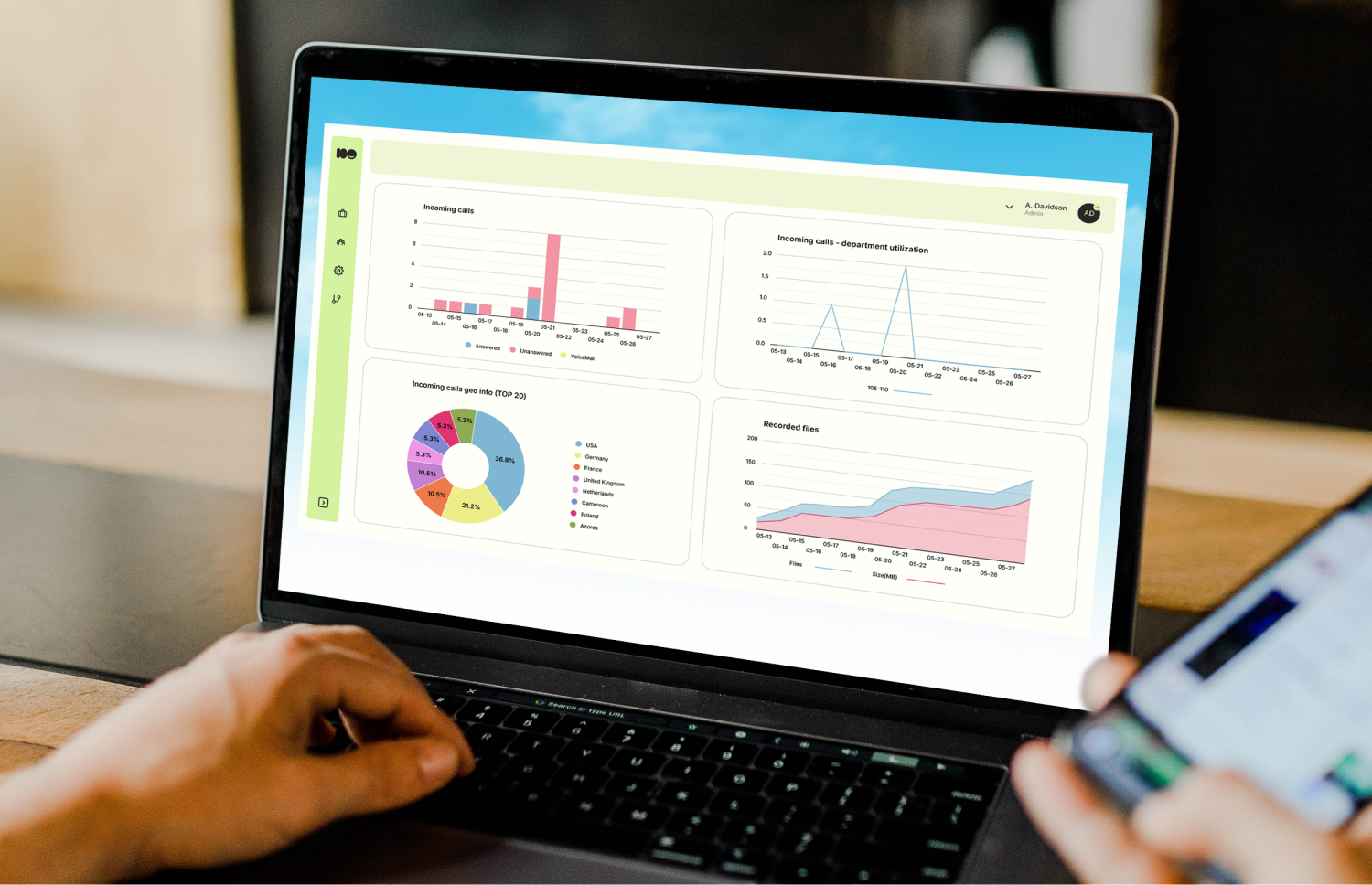
- Analytics collection for monitoring agent and center performance
CRM Integration
Integrating your CRM system with the call center ensures instant access to customer data. For example, operators can address clients by name, quickly view order history, and adapt their tone and approach according to the customer’s segment. CRM data also enables more personalized service and enhances customer loyalty.
Automating Processes with AI
Artificial intelligence is now the industry standard — 98% of contact centers worldwide use some form of AI. In call centers, AI can:
- Automatically analyze call transcripts for quality control
- Suggest optimal responses to agents during calls
- Identify the most suitable agent for routing a call
- Generate concise call summaries for CRM records
Omnichannel Communication and Customer Experience
Customers dislike repeating the same information across multiple channels — phone, chat, or email. Migrating to VoIP is the first step toward integrating all communication channels into one unified solution.
With this integration, your team gains access to the full communication history, allowing agents to focus on solving the problem — not reconstructing the context.
Performance Metrics and Call Analytics
Cost optimization and automation aren’t the only advantages of VoIP for business. Cloud PBX systems enable you to track and analyze key call center KPIs, such as:
- First call resolution rate
- Average issue resolution time
- Average handling time
- Average response time
- Number of calls handled per hour
- Average wait time
- Call transfer rate
- Average call duration
- Agent occupancy rate
- Missed call percentage
How to Implement New Technologies Without Service Disruption
Without proper planning, adopting new call center technologies can result in unexpected costs, service interruptions, and poor ROI.
Before implementation, it’s important to:
- Analyze customer interaction channels and identify inefficiencies
- Review and adjust call flows, routing strategies, and workflows
- Involve professionals experienced in call center system integration
- Prepare agents for new software and processes
- Start with a pilot project and assess its outcomes before full rollout
- Continuously monitor analytics to detect operational issues and improve workflows
DID Global’s call center solutions help increase agent productivity and improve customer satisfaction through automation and advanced analytics. Make your communications more efficient with comprehensive implementation support from DID Global.