

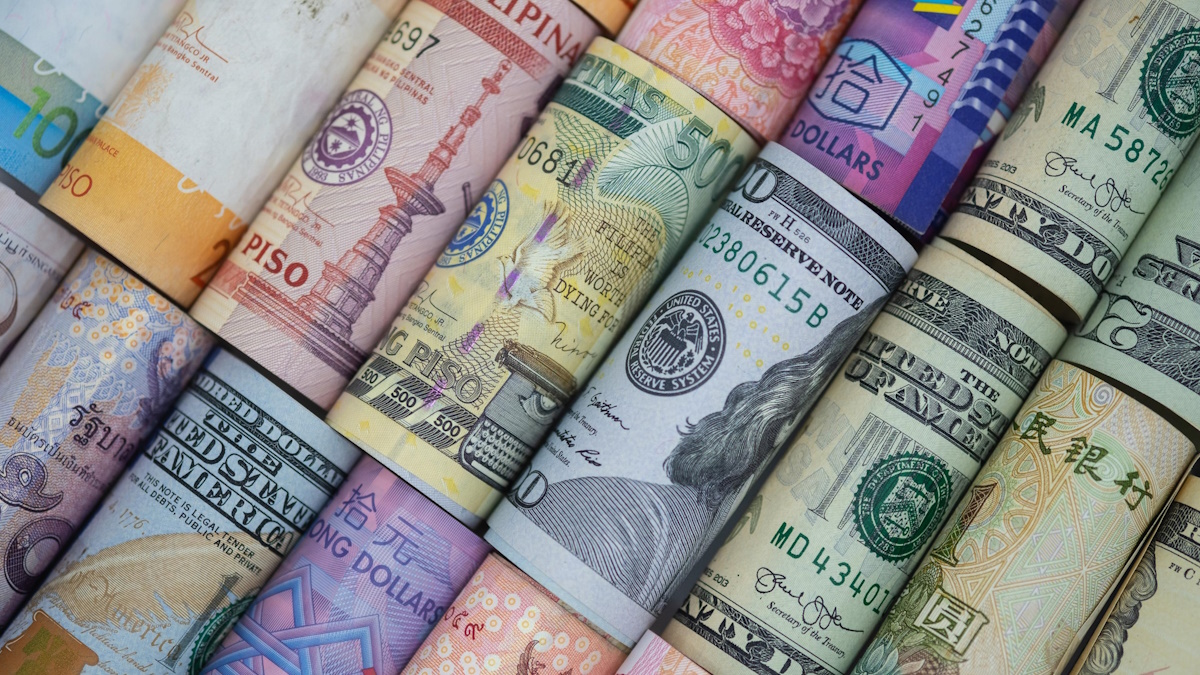
Daily briefing on fintech: regulatory headwinds in India, Tether’s Bahrain MoU, eToro’s AUD rollout in Australia, Airwallex hires for SEA growth, and Jorn Lyseggen’s AI banking play for Africa — analysis, implications, and what investors and founders should watch.
Lead: why today matters in fintech
Fintech in 2025 feels like a map being redrawn in real time. The big stories today — from India’s cautious posture at the world’s largest fintech jamboree to bilateral partnerships like Bahrain FinTech Bay and Tether, product localization from eToro in Australia, strategic hires at Airwallex across Southeast Asia, and an ambitious AI-first banking play for Africa from Meltwater founder Jorn Lyseggen — aren’t isolated headlines. They are signposts pointing to two intertwined trends: regulatory divergence (CBDC-first jurisdictions vs. pro-crypto hubs) and regional specialization (local rails, local products, local talent). In short: capital will follow clarity; talent will follow mission; and the startups that survive will be the ones that understand both the law and the local customer.
1) India bans crypto talk at the world’s largest fintech summit — and that silence is a signal
At Global Fintech Fest (the world’s largest fintech gathering in Mumbai), organizers reportedly kept a tight lid on any crypto commentary — effectively banning talk of cryptocurrencies and stablecoins on the main stage. The move wasn’t an accident of taste; it was a policy signal. India is increasingly favoring state-backed digital currency efforts, sandboxed CBDC pilots, and stringent oversight for private crypto activity. The messaging at the event — and subsequent regulatory actions such as notices to offshore exchanges — underline a deliberate strategy: preserve fintech growth while quarantining what regulators label systemic risk.
Why it matters (op-ed):
India is one of the largest and fastest-growing fintech markets globally. When it chooses caution over crypto openness, global fintech allocation decisions shift. VCs, exchanges, and token projects now face two choices: (1) design India-safe products (tight KYC/AML, focus on payments and tokenization under RBI-friendly models) or (2) prioritize listings, engineering, and talent hubs in more permissive jurisdictions (Singapore, Dubai, Bahrain). Either way, this kind of public silence from a major host city sends a capital-allocation shock wave that goes beyond headlines.
Implications for stakeholders:
-
Startups: Reassess product roadmaps to favor RBI-palatable features (CBDC integration, regulated tokenization).
-
Investors: Expect shorter windows for exits tied to retail crypto adoption in India; diligence legal/regulatory tail risk more heavily.
-
Policy watchers: Watch for final legislative moves—India’s strategy has been to nudge activity into government-supervised rails rather than outright immediate bans, but rhetoric and enforcement actions have hard edges.
Source: Yahoo Finance, Reuters coverage corroborating the conference posture.
2) Bahrain FinTech Bay + Tether: stablecoin engagement meets regulatory scaffolding
Bahrain FinTech Bay (BFB) and Tether have signed an MoU to accelerate blockchain education, stablecoin awareness, and projects aligned with Bahrain’s new stablecoin regulatory framework. The MoU emphasizes education, talent development, and the promotion of compliant stablecoin use cases — a clear attempt to marry Tether’s market reach with Bahrain’s nascent, pragmatic regulatory stance.
Analysis (op-ed):
This is classic ecosystem engineering. Bahrain is building an onshore stack: regulation first, then industry partnerships. For Tether — the dominant stablecoin issuer by market share — the partnership offers market legitimacy and regulatory predictability in a region eager to attract payments and tokenization activity. For Bahrain, partnering with a major stablecoin actor signals to investors: “Come build here; we’ll give you rules and a sandbox.” Expect more such MoUs in the Gulf as jurisdictions jockey for tokenization, cross-border payments, and token-based yield models under supervised guardrails.
Strategic questions:
-
Will Tether’s involvement encourage other stablecoin providers to engage in compliance-forward partnerships?
-
Can Bahrain’s framework become a regional standard, or will fragmentation persist between Gulf states?
Source: TechAfrica News.
3) eToro goes local in Australia: AUD accounts and Spaceship access in-app
eToro is officially “going local” in Australia by launching AUD-denominated accounts and offering in-app access to Spaceship (a local investment product) — part of a broader strategy to localize custody, payments, and product partnerships by market rather than relying on cross-border rails alone. Local accounts reduce FX friction, improve UX, and make eToro more competitive with domestic brokers.
Why localization wins:
Digital platforms that globalize often stumble on the last mile: local currency friction, divergent tax/treatment of investment products, and trust. By enabling AUD accounts and integrating a domestic fintech product (Spaceship), eToro is lowering friction and signaling long-term commitment — normally a precursor to higher user lifetime value and broader product bundling (payments, wallet, local debit cards). For incumbents and neobanks, this is a reminder: global UX must be married to local rails or risk commoditization.
Business impact & competitive dynamics:
-
Retail investors get simpler onramps and lower FX costs.
-
Competitors must either improve localization or double down on differentiators (e.g., lower costs, niche product suites).
-
Regulators will watch custody and investor protections closely — localization raises the stakes for compliance.
Source: Finance Magnates.
4) Airwallex hires Alin Dobrea to drive challenger-fintech growth across SEA
Airwallex has added Alin Dobrea (a seasoned payments/fintech executive) to lead growth for challenger fintech initiatives across Southeast Asia — a strategic hire that reflects the company’s ambition to tighten merchant and SMB product penetration in a region dominated by fragmented payments rails and rising local challengers.
Why the hire matters:
Southeast Asia is a patchwork market: different wallets, banks, payment preferences, and regulatory regimes. Growth leaders who understand the local product-market fit, partner ecosystems, and regulatory contours are gold. Airwallex’s hire suggests the company wants to accelerate product localization, deepen partnerships with local banks and PSPs, and move from pure FX/payment rails into value-added merchant services and embedded finance. Those are higher-margin pathways that also increase stickiness.
Implications for the competitive field:
-
SMBs could see richer cross-border collections and local payout options.
-
Other scaleups should expect increased consolidation and talent competition.
-
Ecosystem: more hiring signals that regional scale requires boots on the ground and C-level talent with market knowledge.
Source: MARKETECH APAC.
5) BMONI: Jorn Lyseggen’s AI banking play for Africa — a founder’s second act
Jorn Lyseggen (founder of Meltwater) is backing BMONI, an AI-driven fintech focused on reimagining African banking by combining AI credit decisioning, embedded banking, and data analytics tailored to local needs. The pitch: create banking services that are affordable, data-driven, and specifically adapted to African market realities (informal incomes, agent networks, mobile money interoperability).
Op-ed take:
Africa’s fintech story is not a single plot — it’s a dozen regional narratives. The most successful plays marry product with distribution: think mobile money interoperability + local agent networks + credit models that use alternative data. BMONI’s AI focus is promising because algorithmic lending — when done responsibly and transparently — can lower costs and expand access. But two caveats matter: (1) model explainability and regulatory acceptance, and (2) data sovereignty and privacy norms. Without clear frameworks, AI-credit pilots risk blowups that could scuttle trust.
What to watch:
-
Partnerships with telcos and agent networks (distribution).
-
Local regulator acceptance of AI-credit models and transparency standards.
-
Responsible data governance to avoid biased outcomes in credit scoring.
Source: Naijapreneur.
The theme across stories: regulation, localization, and AI — the new trifecta
Across the five headlines, three repeating motifs emerge:
-
Regulation is the GPS: Bahrain’s stablecoin framework and India’s crypto silence show that policy is not background noise — it’s the routing system directing where capital and talent go. Countries that publish clear rules for stablecoins, tokenization, and CBDC interoperability will attract regulated players.
-
Localization beats one-size-fits-all: eToro and Airwallex remind us that global fintech must feel local. Local currency accounts, in-app access to domestic products, and regionally tailored leadership are differentiators that raise acquisition efficiency and retention.
-
AI for credit and personalization is non-negotiable: From BMONI’s AI banking thesis to tokenized yield models that use algorithmic risk controls, AI is becoming the spine of next-gen fintech offerings — but it has to be paired with governance.
Strategic playbook for founders, investors, and incumbents
For founders:
-
Build modular products with configurable compliance: design an architecture where KYC, custody, and payments modules can be switched on/off per market.
-
Localize early: currency rails, tax treatment, and UX expectations differ materially; treat them as product problems, not legal workarounds.
-
Prioritize explainability in AI credit: transparency eases regulator relations and reduces reputational risk.
For investors:
-
Sharpen your regulatory diligence: a “good” startup in a restrictive jurisdiction can still be a great exit if it can pivot or license technology to permissive markets.
-
Value talent that blends product with policy knowledge — former regulators and local payments leaders can disproportionately de-risk investments.
For incumbents and banks:
-
Partner, don’t only compete: regulators and customers reward hybrid models that pair legacy trust with fintech agility.
-
Invest in sandbox programs and real-world pilots to move from PR to product—policy experiments inform product roadmaps.
Quick, tactical takeaways (bullet points)
-
India: Expect more sandbox initiatives, tighter AML enforcement on offshore exchanges, and slower retail crypto adoption unless a clearer regulatory path emerges.
-
Bahrain/Tether: Gulf states are positioning as regulated hubs for stablecoin experimentation — watch for pilot launches and talent inflows.
-
eToro Australia: Localized accounts lower FX friction and are a playbook for other global brokers entering large domestic markets.
-
Airwallex: Strategic hires show focus on merchant services and embedded finance — expect product expansion.
-
BMONI: AI credit + local distribution is the right idea; execution and governance will determine whether it succeeds.
What investors should watch next (signal checklist)
-
Stablecoin licensing updates from GCC and APAC regulators — these will indicate where tokenized payments will scale.
-
India’s legislative calendar on crypto and stablecoins — any parliamentary movement will reset valuations and user adoption trajectories.
-
Product launches that combine local currency accounts + embedded products (cards, loans, wallets). eToro’s step in Australia is a blueprint.
-
Sandbox outcomes for AI credit pilots — regulators publishing performance and fairness metrics will be a positive sign for wider deployment.
Closing commentary — a pragmatic manifesto for fintech in 2025
Fintech’s near future won’t be decided in one city or by one class of product. It will be decided where rules are clear, products meet local needs, and AI is used responsibly. Bahrain’s outreach to Tether shows how regulation plus industry partnerships can create fertile ground. India’s silence on crypto at a major fintech festival reminds us that regulatory caution can be a competitive moat — for some. eToro and Airwallex demonstrate that localization and leadership matter. And entrepreneurs like Jorn Lyseggen signal the continued conviction that well-designed tech (AI + local distribution) can expand financial access.
If there’s one thesis to take away: build for the regulatory regime you want to operate in — but validate your product in the market you want to serve. The successful winners of the next fintech cycle will be the teams that can do both, at speed and with care.
Sources
- India bans/limits crypto talk at the Global Fintech Fest — Source: Yahoo Finance (user link provided) and corroborated reporting by Reuters.
- Bahrain FinTech Bay and Tether MoU — Source: TechAfrica News.
- eToro local AUD accounts & Spaceship access — Source: Finance Magnates.
- Alin Dobrea joins Airwallex (SEA growth) — Source: MARKETECH APAC.
- Jorn Lyseggen and BMONI for African banking — Source: Naijapreneur.

