Healthcare organizations today face an alarming rise in data breaches, posing a persistent and widespread threat that demands immediate action to protect patient privacy and operational integrity.
Understanding the Severity of Healthcare Data Breaches
The sensitivity and value of protected health information (PHI) make it a prime target for cybercriminals aiming for identity theft, phishing attacks, and ransomware exploits. Effective cybersecurity measures are essential not only for regulatory compliance but also to safeguard individuals’ most intimate data from increasingly sophisticated threats.
Statistics and Trends
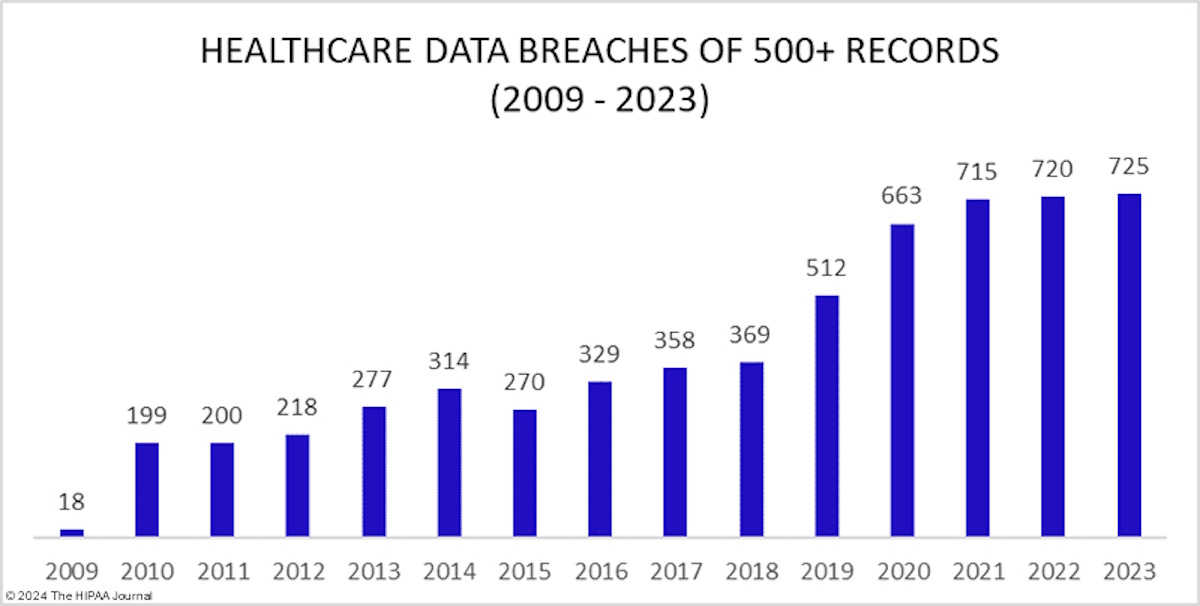
The healthcare sector is experiencing an unprecedented surge in cyberattacks, with data breaches reaching record highs. In 2023 alone, the Department of Health and Human Services (HHS) Office for Civil Rights (OCR) reported an astounding 725 significant breaches, doubling the previous year’s rate. This increase reflects a growing trend where the sector now faces two major breaches daily, highlighting the escalating frequency and complexity of attacks.
The scale of these breaches is equally troubling. In 2023, over 133 million healthcare records were compromised—a staggering 156% rise from the previous year. Among these, 114 breaches affected more than 100,000 records, with 26 breaches impacting over 1 million records, including one devastating incident compromising 11.27 million records.
Noteworthy Cases
Several high-profile breaches have underscored vulnerabilities in healthcare cybersecurity frameworks. For example, HealthEC, a New Jersey-based analytics software vendor, fell victim to a breach affecting the protected health information of approximately 4.45 million individuals. Similarly, ESO Solutions, a provider of emergency medical services software, experienced a ransomware attack affecting at least 12 health systems and hospitals, compromising patient data security.
In another instance, the Clop hacking group exploited a vulnerability in Progress Software’s MOVEit Transfer solution, impacting over 2,600 organizations globally, with healthcare being a primary target. These incidents highlight the escalating sophistication of cyber threats facing the healthcare sector.
Common Causes of Healthcare Data Breaches
Data breaches in healthcare typically stem from system vulnerabilities, human error, and targeted cyber attacks. Outdated legacy systems, inadequate security patches, and vulnerabilities in third-party services contribute to system weaknesses. Human errors, such as phishing scams and poor cybersecurity practices among staff, also play a significant role. Cybercriminals leverage advanced malware and ransomware to exploit healthcare’s valuable data, driving up the frequency of attacks.
Impact on Healthcare Organizations
Financially, data breaches impose substantial costs on healthcare providers, averaging approximately $10.93 million per incident. These costs encompass breach response, legal fees, HIPAA fines, and increased insurance premiums. Moreover, breaches tarnish the reputation of healthcare organizations, eroding patient trust and loyalty. Patient privacy concerns escalate, with potential impacts on medical care due to compromised data integrity and security.
Preventive Measures for Healthcare Data Security
To mitigate these risks, healthcare organizations must establish robust cybersecurity infrastructures. This includes deploying strong encryption protocols, implementing strict access controls, and conducting regular security audits and risk assessments. Comprehensive staff training on cybersecurity best practices is crucial to minimize human error and enhance overall security awareness.
Source: securityboulevard.com