
Asia remains the powerhouse of the global gaming economy, generating an estimated $84 billion in in-game revenue in 2024. China leads with nearly $49 billion, followed by Japan at $20 billion and South Korea at $6 billion.
“Western studios often underestimate Korea and that’s why they struggle,” said Maria Amirkhanyan, Head of Gaming Division at Duamentes, Global Strategic & Product Consultancy, headquartered in the UK. “Korea is one of the rare markets where PC cafés still drive discovery, where esports stars influence player adoption as much as advertising, and where players expect faster content updates than in the West. To succeed, studios must adapt gameplay balance, community features, and live-ops cycles to Korean standards.”
Asia at a Glance
- Top platform: Korea favors PC and mobile together, Japan is mobile first with handheld consoles strong, China is mobile dominant.
- Preferred genres: Korea leans FPS, MMORPG, and auto-battlers. Japan skews to JRPG, puzzle, and narrative. China trends to strategy, gacha, RPG, and MOBAs.
- Monetization: Korea responds to skins, cosmetics, and battle passes. Japan remains gacha heavy with character affinity. China mixes gacha and IAP bundles at scale.
- UX expectations: Korea expects fast, sleek UI with clear progression. Japan values clean typography and narrative pacing. China embraces dense, flashy reward loops. In the West, smooth, readable, intuitive wins.
- Community and media: Korea lives on Naver, DC Inside, Discord, and Soop. Japan uses LINE, Twitter, and 5ch. China uses Bilibili, WeChat, and TapTap. The West uses Reddit, Twitch, and Discord.
Korea is Different
PC bangs shape demand. PC cafés drive discovery through exclusive in-game bonuses and faster access. If your content is not visible or advantageous in PC bangs, you are invisible to a big part of the market.
Status is a core motivator. In gaming, the Korean concept of 엄친아 (eomchina) – “the perfect peer your mom compares you to” – captures the power of status as a motivator. Prestige, rarity, and visibility drive competition, and players chase mastery not just for themselves but for recognition within their community.
Spending profile. ARPU in Korea is tracking toward roughly 369 dollars by 2029, anchored in cosmetics and status items. In Japan, gacha dominates through character attachment. In China, mid-tier ARPU around 140 to 170 dollars rides on high-volume repeat purchases.
UX is brand. In Korea, performance equals trust. UX must be fast, responsive, visually clean, with progression always visible. Slow-loading UI is perceived as unprofessional.
What works in Korea
Korea-grade polish. Riot set the bar by prioritizing snappy feedback, ultra-low latency, and fast hit registration from day one. This is not a nice to have. It is the minimum standard for credibility.
Dedicated local servers. Korean players do not forgive poor optimization, even in alpha or beta. Optimize before open beta, not after launch.
A physical footprint that saturates the city. The best launches are everywhere. Banners, buses, metro stations, mall doors. Campaigns are built for Korean channels and anchored by a trusted local influencer who carries the message.
Community built for Korea. Run community management, PR, influencer activations, PC bang programs, and social content tailored to Naver, DC Inside, Soop, and Discord. One-size-fits-all global social will not deliver Korean traction.
Showcase of Korean-Polished UX
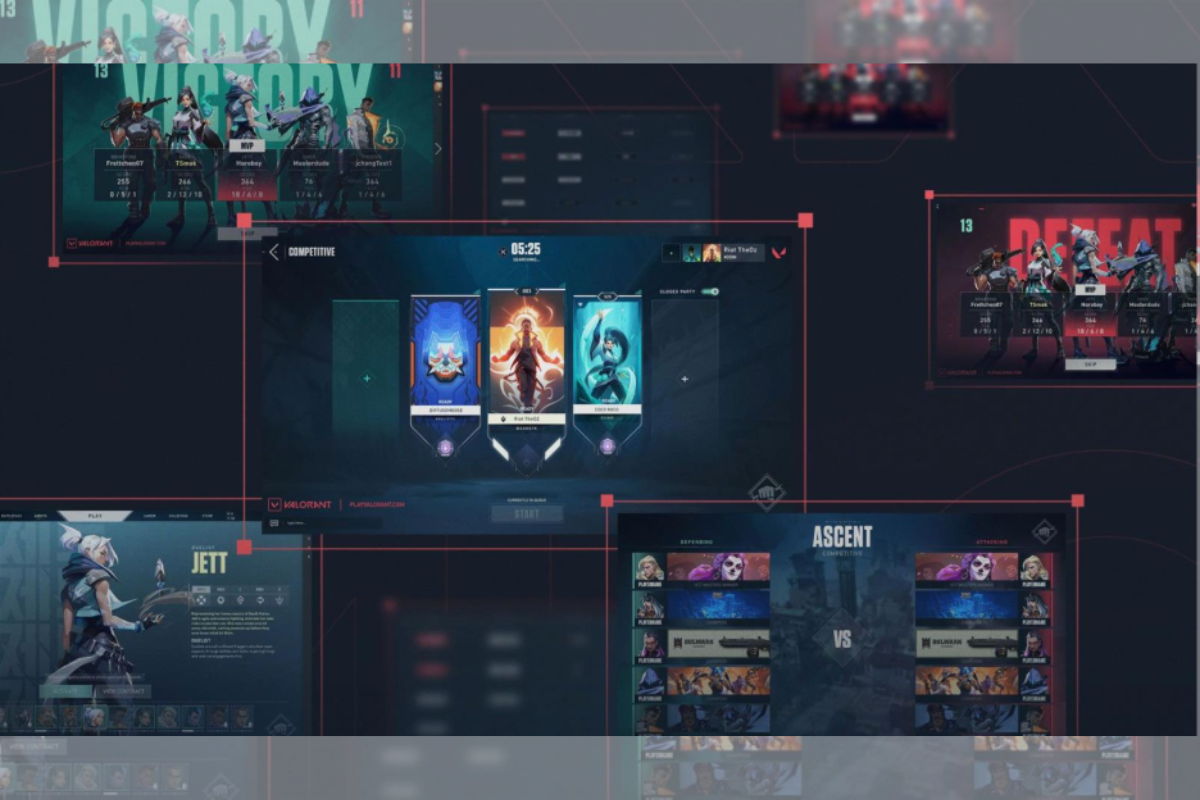
Valorant’s interface is a great example of Korean-polished UX – a term often used to describe the meticulous attention to clarity, hierarchy, and aesthetic refinement that Korean games and platforms have become known for. Every screen in Valorant, from agent select to post-match summaries, reflects four key qualities:
1.Clarity under pressure
Information is structured so that what matters most (agent role, player status, match result, MVP stats) is instantly visible, even in the heat of competitive play. Typography, iconography, and color coding reinforce this hierarchy without overloading the player.
2.Polished transitions and feedback
Hover states, animations, and progression cues are smooth and consistent, giving the player micro-feedback loops that feel both rewarding and intuitive. This creates the sense of a responsive, living interface rather than static menus.
3.Prestige and visibility baked into UX
Ranked ladders, agent cards, and post-game stat boards don’t just report data; they frame achievement in a way that enhances social comparison and recognition. This mirrors how Korean games often turn UI into a stage for status.
4.Depth through detail
“In Korea, it’s common for designers to fill space with small, almost ornamental details that don’t carry functional meaning but add richness and depth,” said Maria Amirhanyan, Head of Gaming Division at Duamentes.
Valorant adopts this principle: subtle grids, faint patterns, and background accents provide atmosphere without clutter, making the interface feel premium yet lightweight.
The result is an interface that isn’t just functional, it feels cultural. It combines esports readability with the aspirational polish of Korean game UX, showing how subtle design philosophies can make the meta-layer as engaging as the core gameplay itself.
Checklist for Korean launch
- Lock low-latency netcode and fast hit registration early. Treat it as brand equity.
- Stand up dedicated Korean servers and optimize before open beta.
- Build a PC bang plan with exclusive bonuses and café incentives.
- Design status-visible cosmetics with meaningful rarity and social signaling.
- Add a competitive spine. Ranked modes, clear mastery steps, and visible progression are table stakes.
- Localize UX, not just language. Adjust pacing, information density, and reward cadence for Korean expectations.
- Program Korea-native channels. Naver, DC Inside, Soop, and Discord with community managers who speak the culture.
- Anchor launch with a trusted Korean creator and saturate offline with metro, bus, and retail placements.
- Time launch with local calendars and cultural moments.
- Test with Korean gamers before launch. Use real feedback loops to tune polish and fit.
“Korea rewards games that feel native. That means speed, prestige, competitive clarity, and real presence in the places players live, online and offline,” said Maria Amirhanyan, Head of Gaming Division at Duamentes.
If you are porting a global strategy without rebuilding the experience for Korea, you are betting against the market. Build for how Koreans actually play, spend, and flex status, and you give your title a real shot at durable growth.