
In the fast-paced world of local commerce—whether it is a bustling dental clinic, a high-end aesthetic center, or a busy auto dealership—customer acquisition often comes down to a single metric: speed. Yet, thousands of businesses lose revenue every single night simply because their teams are asleep.
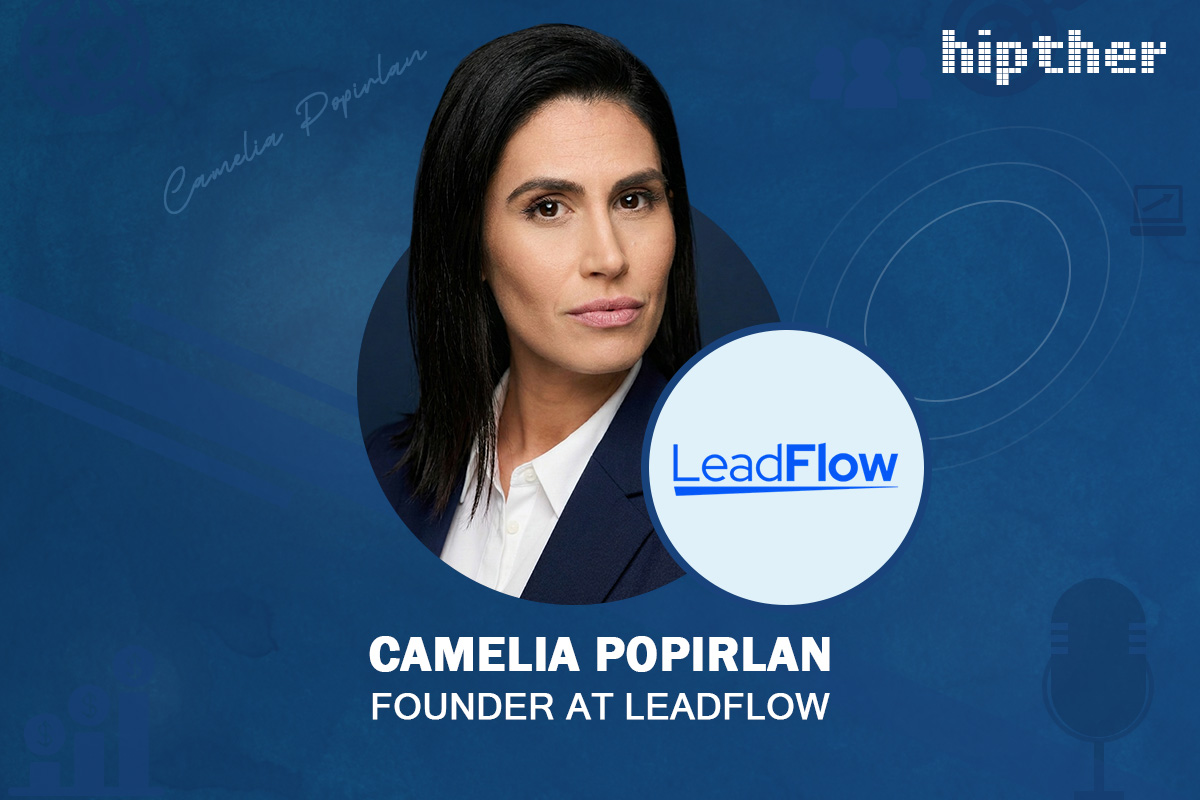
We sat down with Camelia Popirlan, the founder of Leadflow, to discuss her transition from managing international retail operations to building next-generation digital agents. Operating quietly underneath a business’s communication stack, Leadflow achieves a 100% response rate across Instagram, Facebook, WhatsApp, websites, and email—ensuring no lead is ever left in the dark.
From Corporate Retail to a Universal Insight
Hipther: You spent a decade leading sales and operations for international retail brands. What was the exact “aha!” moment when you realized that delayed responses were the universal Achilles’ heel of businesses, regardless of industry?
Camelia Popirlan: There wasn’t one dramatic moment; it was a pattern I couldn’t unsee. In ten years of leading retail sales and operations teams in Romania, I watched the same scene repeat everywhere: a customer reaches out in the evening, nobody answers until the next morning, and by then they’ve already bought somewhere else.
What struck me was that this had nothing to do with product quality or price. Great businesses were losing to average ones purely on speed. When I later saw the same pattern in clinics, salons, and dealerships—industries with nothing else in common—I understood this wasn’t a retail problem. It was a response-time problem, and it was universal.
Hipther: You rightly mentioned that hiring more night-shift staff isn’t sustainable because humans ultimately need to sleep. When designing Leadflow, what were the primary psychological or operational barriers you had to overcome to trust AI with direct customer conversions?
Camelia Popirlan: The biggest barrier was mine, honestly. Coming from retail, I believed sales conversations were sacred human territory. What changed my mind was watching what actually happens in those conversations: 80% of them consist of the exact same questions regarding price, availability, how it works, and booking requests. Humans answer them worse at 11 PM than a well-configured digital agent does.
The operational barrier was different: business owners fear losing control of their brand voice. We solved that by making every agent learn the specific business, its services, its tone, and its boundaries before it ever talks to a customer. The agent doesn’t replace the owner’s judgment; it applies it consistently at hours when the owner is asleep.
Reimagining the Conversational Skeleton
[ Traditional Chatbot ] ───> Menu-Driven ───> Frustrated Customer (Leaks Leads)
[ Leadflow Digital Agent ] ──> Context-Aware ─> Natural Objection Handling (100% Response Rate)
Hipther: Many local businesses have had frustrating experiences with rigid, button-and-menu-based chatbots. How does Leadflow’s natural conversation model handle complex contexts and real client objections like a senior human employee would?
Camelia Popirlan: Button chatbots fail because they force the customer to adapt to the machine. Our digital agents do the opposite. They hold natural conversations, remember the full context of what was said earlier, and handle objections the way a good employee would—by addressing the actual concern, not by offering a menu.
If a patient says “that seems expensive,” a button bot is lost. Our agent knows how to explain value, offer alternatives, or propose a consultation because it was configured with the same answers the business’s best employee would give. The difference customers feel is simple: it’s a conversation, not a form.
Hipther: Leadflow promises an impressive 5-day setup with zero technical effort required from the business owner. How did you structure your onboarding process to make cutting-edge AI implementation so frictionless for non-technical local businesses?
Camelia Popirlan: We designed onboarding around one rule: the business owner’s only job is to talk about their business, something they love doing anyway! In a short, structured conversation, we extract everything: services, prices, tone, frequent questions, and booking rules. Our team then builds, tests, and connects the agent to their existing channels.
The owner never touches anything technical—no installations, no dashboards to learn on day one. Five days is enough because we standardized the process per industry. A dental clinic and an auto dealership need different conversations, but the structural skeleton of each vertical repeats. That’s what makes it fast without being generic.
The Psychology of Verticals and Going Global
| Industry Vertical | Core Communication Pattern & Psychology |
| Medical & Dental Clinics | Anxiety-driven; late-night questions about pain and pricing. Speed of reassurance is paramount. |
| Aesthetics Centers | Heavy research phase; clients message multiple clinics simultaneously. The first useful answer wins. |
| Auto Dealerships | Highly concrete queries (financing, trade-ins, availability). Vague responses trigger high abandonment. |
| Salons & HORECA | Heavily dependent on rapid rebooking and rescheduling; missed messages mean empty chairs. |
Hipther: Leadflow has solid roots in the Romanian local market and is now gearing up for international expansion. What are the main challenges you foresee when scaling your digital agents to support multilingual and culturally diverse global markets?
Camelia Popirlan: Expansion is a serious part of our plan. Romania is our proving ground, not our ceiling. The playbook we’re building here is designed from day one to travel. The problem we solve is identical in Warsaw, Madrid, or São Paulo because a message left unanswered overnight costs a clinic in any country the same lost client.
The technology is the easy part—our digital agents already handle multiple languages naturally. The real challenge, and the one we’re preparing for deliberately, is cultural calibration. How directly you can propose a booking, how formal the tone must be, and how people express objections differ profoundly by market. An agent tuned for Romanian conversational habits would feel slightly off in Germany and completely wrong in Japan.
Our approach to going global is to rebuild the conversational playbook per culture with local knowledge, market by market, the same way we built vertical-specific playbooks per industry here at home. Every month in the Romanian market compounds the asset that matters most for international scaling: thousands of real conversations that teach us what customers actually ask, object to, and respond to. When we cross borders, we won’t be exporting a tool—we’ll be exporting a tested playbook.
The New Standard for SMB Sales
Hipther: With a 100% response rate across social channels and email, how do you see the future balance between human talent and digital agents in SMB sales teams over the next 3 to 5 years?
Camelia Popirlan: First, a precision on our “100% response rate”: what it means is that no message goes unanswered, and every inquiry gets an instant, useful reply at any hour. That’s the standard we hold.
Looking ahead, I don’t see digital agents replacing salespeople in SMBs; I see them replacing the unanswered message. The repetitive 80% of conversations—price, availability, booking—will be handled by agents instantly. Humans will concentrate on what they’re irreplaceable at: complex cases, deep relationships, and closing high-stakes deals. The SMBs that win won’t be the ones with the most staff or the most automation, but the ones where the two hand off to each other seamlessly.
In five years, “we will answer you in the morning” will sound exactly the way “we don’t take card payments” sounds today.